
Confessions of a Former Anti-Base Activist
(Last Update: )

Once, in Okinawa, where I experienced a horrific battle, Mr. K passionately engaged in anti-base activities under the banner of 'peace.' However, he reflects that his heart was filled with resentment and anger towards the U.S. military and the mainland, in a state that was the complete opposite of 'peace.' This is the story of how Mr. K regained his inner peace.
(K.K. / Okinawa Prefecture / Male / Reprinted and edited from 'The Evangelist' No. 215 )
 Aiming for True Peace
The 'War' That Was Close By

I love the land of Okinawa, where I was born and raised. I will never allow this land to become a battlefield again. With that thought, there was a time when I was deeply involved in anti-base activities. I want to confess my humble journey, reflecting on my experiences.
I was born more than ten years after 'that war.' Life had been restored and calmed down, but the scars of war remained vividly. A short walk would reveal bullet marks from the Okinawa battle on the walls of houses, and in the sugarcane fields, the remains of those who died in the war still lay scattered, and my grandmother warned me not to approach carelessly. For the people of Okinawa, including myself, 'war' was always something close at hand. I still remember a word my mother told me when I was in the fourth grade.
'My father had a best friend, a 'shiri-doushi' (a true friend) back in the day. They always walked shoulder to shoulder, together all the time, even sleeping together, but he was conscripted during the Okinawa battle and never returned.'
I was shocked to learn that my usually cheerful father had such a past.
(The important things can be suddenly taken away.)
Every time I remember my father's profile, I began to harbor such thoughts in my young heart.
The Journey to Becoming an Anti-Base Activist
In 1972, when I entered junior high school, Okinawa, which had been occupied by the United States, returned to Japan. On the day of the mainland return on May 15, everyone in the prefecture was excited, but as that excitement faded, stories that I had never heard before began to be frequently mentioned. 'In the final stages of the Okinawa battle, Japanese soldiers expelled civilians who were taking refuge in air raid shelters to protect themselves.' 'When cornered by the U.S. military, Japanese soldiers executed civilians suspected of being 'American spies.' These were the 'truths' of history I heard from a new homeroom teacher who had fought in the security struggle while in college. At that time, the Vietnam War was in full swing. Even after the return to the mainland, military aircraft flew dozens of times a day from the U.S. military bases that remained in Okinawa.
'Those planes are going far away to Vietnam, dropping bombs on the people there. The weapons of murder are still close by. Do you think this is okay?'
That story somehow overlapped with the sad profile of my father, who lost his best friend in the war.
(We must not create more people like my father. The military is outrageous, and America is outrageous. It is also outrageous that the mainland, which allows this, imposes such things only on Okinawa.)
Naturally, I began to think that way. After graduating from a university in Hokuriku, I sought a workplace that would hire me as an architect, and I approached the office of a well-known anti-war activist architect, deciding to work under him as my mentor. I was 25 years old at the time.
A Momentary Sense of Fulfillment

'While exploiting Okinawa, the mainland takes wealth back. And that wealth flows to the U.S. military. We must break this system of exploitation and being exploited by any means necessary.'
Hearing such words from my mentor, I felt a rising hostility towards the mainland and the U.S. military, thinking, 'I will also do my best to defeat the country and the U.S. military.' Since entering the workplace, I immersed myself in anti-war peace movements alongside my training as an architect. I participated in the opposition movement against the construction of Yaeyama Airport, joined the 'One-Tsubo Anti-War Landlord' opposing the renewal of land leases for U.S. military bases, and supported the progressive candidate who ran in the gubernatorial election. Enthusiastically, I 'transferred' from one movement to another.
In 1987, to express my will for anti-war and peace, I planned to create a 'human chain' to surround Kadena Air Base. Despite the heavy rain on the day, many comrades from the mainland who aspired for peace joined us, and we surrounded Kadena Air Base with a circle of 20,000 people.
'If we expand and strengthen our connections like this, maybe one day there will be no more war.'
While holding hands with my comrades, we had such conversations. At that time, my heart was filled with a sense of fulfillment and satisfaction.
'We haven't received anything!'
However, our movement gradually hit a wall afterward. Since the 'human chain,' no matter how much we called out, support did not spread at all among the so-called 'non-political' people who did not hold specific ideologies.
(Why don't people participate when there is a murderous base there? Do they really love war that much!?)
Such frustration gradually transformed into a feeling akin to anger directed towards the Okinawan people, who I wanted to empathize with. However, on the other hand, I felt that those 'non-political' people were developing better than those who built good relationships with the U.S. military and the affluent mainland without fixed ideas and engaged in peace movements. It was a world that was the complete opposite of what I had imagined. That further irritated my nerves.
'We haven't received anything!' I once marched through Naha City holding such a banner. However, the more passionate I became, the more the people around me 'withdrew.' Around this time, I also frequently had similar dreams. In those dreams, I became a soldier during the Okinawa battle, screaming 'I don't want to die!!' without any weapons, running away from the U.S. military. The content was strangely realistic, and when I woke up, my bedding was always soaked with sweat, and I was always exhausted after those dreams. However, no matter how much I thought about it, there was no answer.
(Even though I should be doing something good, why do I have to go through such painful experiences? If the U.S. military and the mainland were a little better, I wouldn't have to feel this way. If there is a God, can't He do something for me?)
With such thoughts, I immersed myself in the movement.
Between Militarism and Pacifism
A turning point came in 1988. A colleague handed me a book called 'The Spirit of Kukai' (※), published by Happy Science. At that time, in the architectural world, a style of architecture incorporating the feng shui thought of the Heian period, when Kukai lived, was in vogue, so I casually flipped through the pages. Then――.
'The conflict between militaristic, warlike people and those who engage in anti-war movements to crush them is ultimately a conflict on the same level.'
'Both militarism and pacifism stem from the desire to protect one's physical life. Originally, the human soul is separated from God. If that is the case, why would he become an enemy?'
Were those I had considered enemies, the militarists, actually the same as us? It was shocking. It was also the first time I encountered the idea of discussing the issues of war and peace from the perspective of 'God' or 'soul.'
(Who is this Ryuho Okawa who wrote this book? There are indeed remarkable people on the mainland.)
I became interested and decided to study, and the following year I became a believer. I began to learn the teachings of President Okawa alongside my peace movement.
Was I Being Deceived!?
It was around this time that my image of the 'peace movement' began to change. The trigger was when my mentor received a prestigious award in the architectural world.
'Sensei, since you've received such a big award, why don't we start thinking about not just the bases in Okinawa but about Japan as a whole? No matter how much we oppose the mainland, they have accepted us like this.'
In response, my mentor's words were, 'Shut up! It is always the Yamato people (people from the mainland) who destroy Okinawa!'
(Was the person I had followed until now such a childish person...?)
I felt a significant disillusionment with my mentor's stubborn behavior, whom I had thought of as a person with the spirit to protect Okinawa. Furthermore, at a Happy Science lecture I attended in 1994, President Okawa warned about the threat of North Korea's nuclear weapons, going beyond his position as a religious leader for the sake of peace. When I returned home and discussed this topic with my activist friends, everyone turned away.
(We are purely wishing for peace, so if there is something to say to North Korea as well as the U.S. military and the mainland, it wouldn't be fair not to say it. So why is it okay to be silent about North Korea but not about the mainland and the U.S. military?)
I began to feel an unbridgeable gap between my comrades, with whom I had fought together for many years under the banner of 'peace.' I thought I had been purely aiming for peace. I believed it would benefit Okinawa. But what if that activity was actually being used for the benefit of a specific someone?
(Was I being deceived!?)
Such doubts could no longer be ignored. Finally, in 1995, I took the form of 'independence' from the office and parted ways with the comrades I had fought with for over ten years.
'After all, he is from the mainland.'
Since then, I have been visiting the branch of Happy Science regularly, trying to make President Okawa's teachings a new source of support for my heart, and I became engrossed in reading books. One of the books, ' Talking about the Royal Road of Life ,' caught my attention with a certain passage.
'Resentment cannot resolve resentment.'
(That's really true), I thought, and when I considered it, the intense feelings towards the U.S. military and the mainland faded somewhat. However, on a deeper level, there were parts that I could not accept.
(Even so, Okinawa has been discriminated against by the mainland for a long time. Many people died in that war, and even now, most of the U.S. military bases are in Okinawa, and Okinawa bears the crimes of U.S. soldiers. The mainland has done nothing about it. Okinawa is hurt both in the past and present. I can't just turn a blind eye to that... The feelings of the Okinawans can only be understood by the Okinawans. After all, President Okawa is also 'from the mainland'...)
Gradually, while I earnestly studied the spiritual worldview and philosophy of life that President Okawa preached, I unconsciously began to reject discussions about history and political proposals. Even after ten years of being a believer, whenever I saw U.S. soldiers or people from the mainland while driving, I couldn't remain calm.
'What was I really hating?'
Around this time, in 2005, the Okinawa Seishinkan, a training and worship facility of Happy Science, was completed, and I went to visit. I learned that a new sermon by President Okawa would be revealed there, and I hoped to listen to it on the spot. The title was 'To the Okinawa Seishinkan.'
'In Okinawa, hundreds of thousands of people have died, and I think it was very unfortunate and difficult, but I cannot believe that it was a completely meaningless death.'
'The attacking American military is Christian, so it is undoubtedly a battle carried out under Christian civilization.'
'Both sides carried justice, but it was a battle to determine which side was more necessary for the future generations to open up culture and civilization. There was justice on the side that was defeated.'
There were no enemies or victims, no hatred towards U.S. soldiers or Japanese soldiers, just a calm narration of the war. In old Japan, there was justice. The attacking U.S. soldiers also had something to bear. Both sides fought for something, were hurt and fell, and there were people who mourned for them, both in Japan and America――. When I realized that, a thought crossed my mind, (What was I really hating?) at that moment.
(Let us forgive, let us forgive――)
Such words resonated in my heart. To me, it felt like a message from President Okawa.
(By hating someone and expecting someone to make amends, I could finally stand at the starting point of happiness. Perhaps I had thought that way... Maybe I was also using something...)
I felt a sensation as if the cold lump that had been inside me melted away and flowed out with my tears. At that time, I remembered a passage from President Okawa's poem ' Guidelines of the Heart ,' which said, 'Discard hatred and embrace love.' Strangely, from that day on, I stopped having the nightmares I had occasionally experienced since becoming a believer. Looking back now, I feel that my anti-base movement truly ended on that day.
Aiming for a True Peace Movement

Now, when I turn on the TV, I sometimes see former comrades who once fought alongside me gathering in front of U.S. military bases and the prefectural office, protesting. They are all good people individually. However, they always hold placards that say 'anger.' Moreover, their anger is still directed solely at the mainland and the U.S. military, while no one raises their voice against China or North Korea, which are approaching to bring the next war from across the sea. They shout 'peace' while their hearts are filled with anger. And there are always exceptions that should not be criticized regarding that 'peace.' I believe I understand the pain of those who continue their activities from personal experience.
My wish is to never let Okinawa become a battlefield again. That should be the same for my former comrades. 'Peace cannot come from past hatred and resentment. Let us look towards the present and the future.' 'There are forces that currently intend to bring about conflict across the sea. We must protest against such countries without exception and concretely realize peace.' Now, I am beginning to convey this to my former comrades. Okinawa certainly has a tragic past, but because of the tragic experiences, I believe there are things that can be conveyed to future generations and the world. 'World peace begins from inner peace.' 'We must convey what is right to any country.' I believe that is my 'true peace movement' as someone born in Okinawa.
 If we are to 'reduce U.S. military bases,' it should be after 'liberating China and North Korea.'
'The Power of Religion to Protect the Country' 'Modern Justice Theory' (by Ryuho Okawa / Happy Science Publishing) excerpted message
The Threat of China and North Korea Cannot Be Overlooked
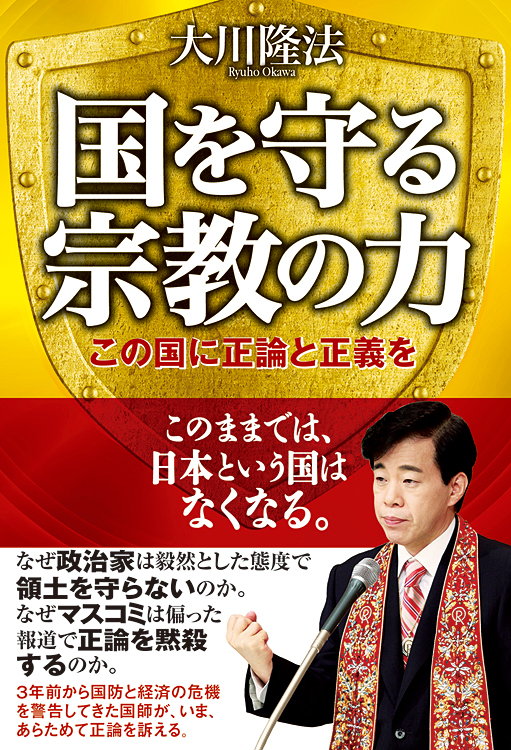
I want to make Okinawa a prefecture that the people of Okinawa can say, 'I'm glad it was returned to Japan,' but I believe that the reduction of U.S. military bases can only be possible after the current regimes of China and North Korea collapse and they become free. Right now, they are still trying to expand their territories, so we cannot reduce the bases. I must say that it is indeed a foolish policy.
It is Natural to Have Feelings of Hatred Towards America
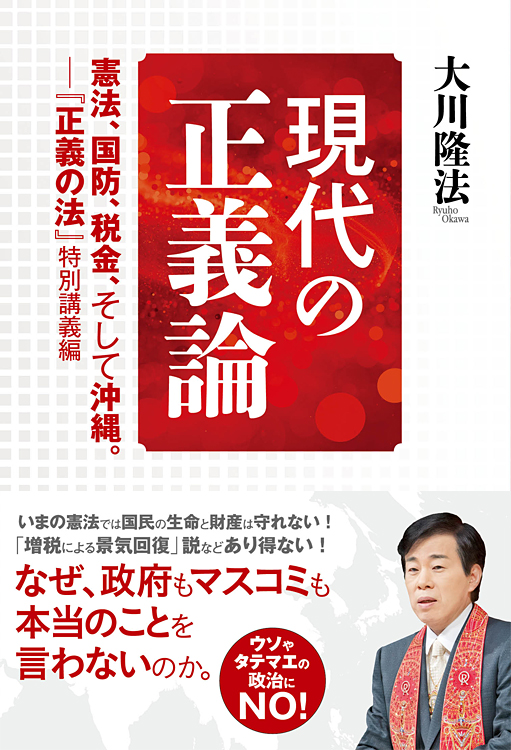
Of course, I understand that there are various opinions regarding the U.S. military's presence. Also, nearly 200,000 people died in the Okinawa battle, many of whom were killed by U.S. naval bombardments, machine-gun fire, or flamethrowers. If there were someone among my relatives with such memories, it would not be something that could be easily forgiven. To be honest, I think it is not something that can be forgiven.
'The Japan-U.S. Alliance' is Protecting the Peace of Japan as a Whole
However, currently, the United States is becoming a 'friend' of Japan. Regardless of what happened in the past, we have built a friendship now. This is a very significant asset.
In any case, maintaining the Japan-U.S. Security Treaty now does not necessarily mean that 'Japan is subordinate to America.' This is an essential way of thinking for Japan to protect this country at this point.
Have You Found Your 'Life's Problem Set' and Solved It?
We are conducting life consultations.
Happy Science supports the resolution of worries and the improvement of life. If you have worries or consultations, please come to the branch. Experienced branch managers and instructors who have trained at Happy Science will listen to you. We will keep your privacy and secrets, so please feel free to talk.

 Let's Use the Power of the Heart
Would you like to learn the power of the heart and turn your fate around?
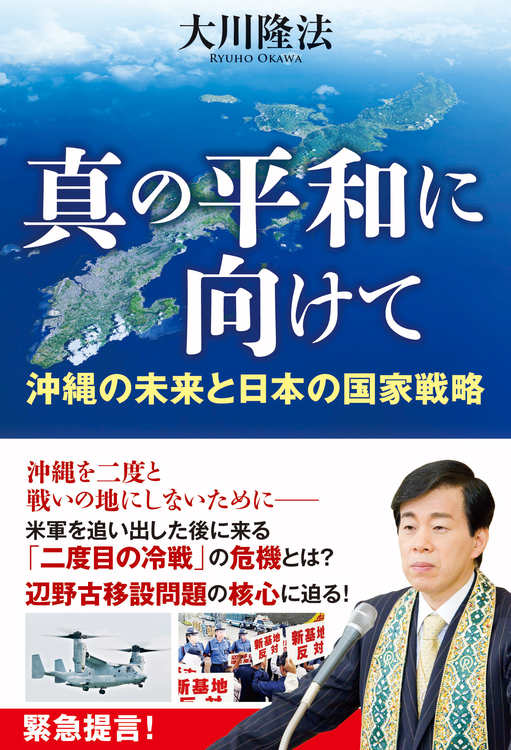
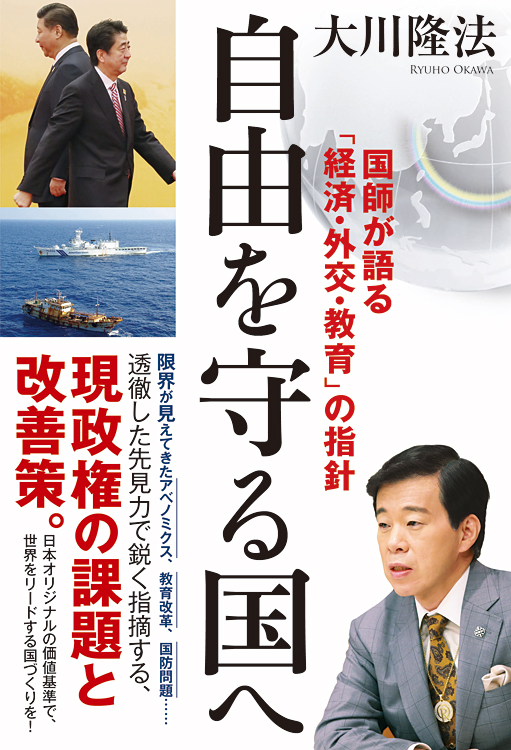
Read a Book
 Listen Directly to a Sermon
'The World of Truth' (49 minutes)
Currently being revealed at nearby Happy Science temples and branches.
 Listen to the Radio
Since its broadcast began in 1991, the radio program 'Angel's Morning Call' has continued to be loved by many listeners.


You may also like


PICK UP
 ログインが必要 … 閲覧には
 入会者限定 … 幸福の科学の会員のみ閲覧が可能です。
 三帰誓願者限定 … 幸福の科学の三帰誓願者のみ閲覧が可能です。
  植福の会参加者向け …
  大黒天信者向け