

現在、大手証券会社の経営管理職を務めるTさんは、2、30代のころ、仕事で成果を上げても「問題社員」と見られ、行き詰まっていました。そんなある日、1冊の書籍と出会ったTさんは、人生の大きな転機を迎えることとに―。
T・Sさん(52歳・愛知県・大手証券会社 営業部長)
月刊「幸福の科学」389号
より転載・編集
(Last Update: )
現在、大手証券会社の経営管理職を務めるTさんは、2、30代のころ、仕事で成果を上げても「問題社員」と見られ、行き詰まっていました。そんなある日、1冊の書籍と出会ったTさんは、人生の大きな転機を迎えることとに―。
T・Sさん(52歳・愛知県・大手証券会社 営業部長)
月刊「幸福の科学」389号
より転載・編集
 反省を通して気づいた本当の成功―
"I have my own way, so please don't interfere with me!"
"What kind of attitude is that towards your boss!"
About 25 years ago, I was assigned to Nagasaki as a salesperson for a securities company, and I was having intense arguments with my boss almost every day.
At that time, I consistently achieved high sales results at that branch and was confident in my work as a young hope. Therefore, I found my boss's instructions very bothersome and often rejected the tasks assigned to me.
(That boss just criticizes my work and doesn't understand anything...)
However, even though I maintained high performance, I gradually started to be removed from important client accounts, and my dissatisfaction with my boss and the company grew, leaving me constantly irritated.
One day, I received a monthly magazine called "The Science of Happiness" from a new client.
(The Science of Happiness? Was it a new religion...?)
I had seen the name "The Science of Happiness" on TV several times, but I didn't have a good impression of it. At that time, I believed that "new religions are for people with weak minds," so I had no interest.
(Well, if it's just for business relations...)
Although I received the magazine, I had no intention of reading it, and after the client left, I put it in the newspaper disposal box without even opening it.
However, that person continued to bring the monthly "The Science of Happiness" without fail. I felt guilty about continuously throwing it away without reading it, and one day, I casually flipped through it.
(Wow, it actually has some good things written in it.)
It contained life and work philosophies that were relevant even for modern businessmen, and my image of new religions changed a bit.
Since then, I started to read the magazine thoroughly every time it was delivered. Eventually, I was invited by the client to participate in a seminar to learn about the "Teachings of the Heart" from The Science of Happiness. Taking time away from the daily hustle and bustle to deeply reflect on my inner self and engage in meditation healed my frayed heart.
Before long, I got my hands on the book by President Okawa, "The Syndrome of Not Being Able to Be Happy" .
"It seems that many people who are struggling with their bosses have a certain level of self-confidence. They are not satisfied with their boss's methods and think, 'I would do it this way,' but their boss has a completely opposite way of thinking." (Note 1)
(Ah, this is about me.)
Every word spoken from the book strangely resonates in my heart.
"One of the reasons for not getting along with your boss is your strong ego. Aren't you being too egotistical? (Omitted) The company aims to survive as an organization and strive for further development, and it is not there to recognize your self-assertion." (Note 2)
("Strong ego," huh. That might be true...)
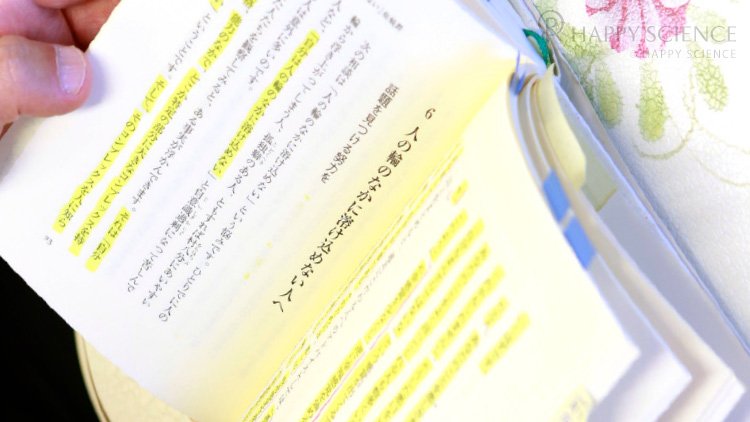
I felt as if I had found a clue to break through the stagnation I had felt for the past few years, and I began to read "The Syndrome of Not Being Able to Be Happy" every day, marking it up and writing down my realizations.
"Feelings of inferiority are turning into resentment towards the boss," "Subordinates who promote their bosses will be promoted themselves," and so on. As I absorbed the content of the book, I gradually became more willing to follow the instructions from my boss, which I had previously not wanted to hear. I also began to work with an awareness of the perspective of "the company's and department's benefits."
(I had been boasting about my results, but the truth is, I was able to work because of the company's reputation. I might have been quite arrogant...)
As I learned from President Okawa's teachings, a "heart of gratitude" began to well up within me, something I had never considered while only chasing numbers.
Notes 1 and 2: From "The Syndrome of Not Being Able to Be Happy" , Chapter 4, "The Syndrome of Not Being Able to Be Happy for Salarymen."
Soon after, I was transferred from Nagasaki to Kyoto. However, due to the "bad reputation" from my time in Nagasaki, I was assigned without inheriting the important clients that were supposed to be passed down from my predecessor. Looking back now, that was probably the company's indirect "resignation recommendation."
Even though the number of clients I was responsible for was reduced by nearly half, my quotas only increased. Despite running around from morning till night, I could only meet half of my quota, and my performance fell to the second worst in the branch.
(Ugh... What on earth should I do?)
I was scolded by my boss almost every day until late at night, and I was physically and mentally exhausted...
During this difficult time, the teachings of President Okawa supported me.
Every day before work, I read President Okawa's books, and I transformed my feelings of wanting to give up and pessimism into positive thoughts, telling myself, "This is a time to train myself."
At work, I referred to President Okawa's lecture "One-Point-Up Work Techniques" (Note 3) and returned to my roots to review my work methods, focusing not on my own results but on "how to truly make clients happy" and "what kind of work benefits the company and department", and I approached my work with a heart of love.
Every Wednesday night, I participate in gatherings with local friends from The Science of Happiness. Spending time with friends with whom I can talk about anything relieves my daily stress and provides me with important energy.
(Work is tough, but strangely, my heart is filled with happiness. I'm really grateful.)
As I continued this daily life, I found that my seniors at work began to give me advice, and the support from those around me increased. Gradually, the number of important clients also increased, and my sales performance rose year by year. By the third year after my transfer, I was able to achieve results nearly three times my quota, reaching a national top-class level. I was also promoted to section chief.
Note 3: A lecture given in April 1997. Included in "The Laws of Happiness" (by Takashi Okawa), Chapter 2.
Note 4: Companions who learn the teachings together.
With my promotion, I was transferred to the main office in Tokyo and was entrusted with a few subordinates, but initially, I struggled with managing them, and the department's performance was at the bottom of the main office. A new challenge arose.
(I need to learn a different way to achieve results as a team.)
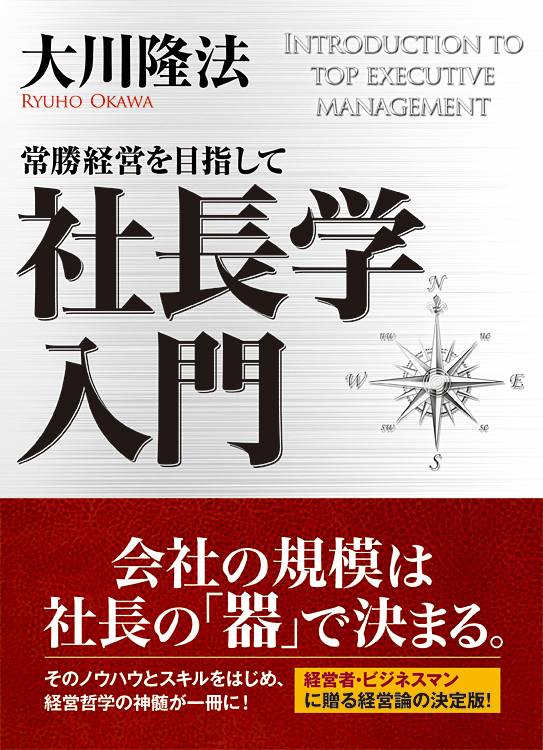
So, I learned the key points of organizational management from President Okawa's lecture "The Science of Happiness Management Theory" (Note 5) and put them into practice.
Specifically, I collected successful sales cases within the company, shared know-how with my subordinates, and collaboratively devised sales methods that would lead to their performance improvement. I also instructed them on how to use their time effectively to enhance work efficiency, and for subordinates who were struggling, I shared my own experiences to help them cultivate their inner strength through their slumps.
Then, as everyone's performance gradually began to improve and the number of employees working with enthusiasm increased, the team's performance, which had been lagging, also exceeded 120 percent.
Before encountering the Science of Happiness, I thought, "As long as I'm okay, that's enough," and I was constantly in conflict with my boss. However, now I realize that "living to serve others and society" is the way to build wonderful relationships and achieve success.
Note 5: A sermon delivered in September 1996. Included in Chapter 1 of the book 'Introduction to CEO Studies' (by Takashi Okawa) .
At that time, when I was clashing with my boss, I was leaning towards leftist ideology. I also served as a representative of the union and thought, "Is it justifiable to pursue the responsibility of management?" However, after learning the importance of personal responsibility from President Okawa's teachings and taking responsibility for the company's performance, my results began to improve.
President Okawa teaches that 'to create a happy world, freedom, democracy, and faith are necessary,' and I truly believe this from my own experiences. In Japan, I think it is especially important to convey the 'importance of faith.'
From now on, I will continue to spread the teachings of the Science of Happiness, increase the number of successful people, and engage in activities to create a happy society.
―Points of success practiced by Mr. T―
1. Suppress your own desires and wish for the success of others
2. Be mindful of 'giving love' in your work
In Mr. T's experience, it was mentioned that happiness arose as he improved his interactions with those around him, and his work results also increased.
So, how can we build such 'good relationships'? Here are some key points introduced from President Okawa's book 'The Law of Bronze.'


The ego that should be suppressed is the excessive self-preservation and self-centered thought of 'as long as I'm good.' This can create walls between oneself and others, leading to jealousy and hatred. When you feel disharmony with those around you, try to suppress the 'blaming heart' and let go of the desire to be recognized. This is the first step to building good relationships.
Let's try it from today
□ Let's think from the other person's perspective.
□ Let's reflect on whether we are treating those around us fairly.
□ Let's cultivate the habit of working diligently without seeking recognition.

Once you suppress the ego, the next step is to observe those around you. When you discover others struggling and making efforts, you realize that our society is supported by the strength of many people. Then, by expressing the gratitude of 'I also want to give back to society' through actions, you can grow into an attractive personality that harmonizes with those around you.
 読むと人生に希望が持てるオススメBOOK
『幸福の法』 (大川隆法 著/幸福の科学出版)
自分の点数を上げることも大事なのですが、それが、自分のいる課や部、あるいは会社において、ほかの人にとってもプラスになる方向で、常に考えておく必要があります。






 ログインが必要 … 閲覧には
 入会者限定 … 幸福の科学の会員のみ閲覧が可能です。
 三帰誓願者限定 … 幸福の科学の三帰誓願者のみ閲覧が可能です。
  植福の会参加者向け …
  大黒天信者向け