
No one has ever become happy by blaming themselves - Let's have the "courage to forgive ourselves".
(Last Update: )
To you who feel guilty and blame yourself for various events in life. Please stop blaming yourself. You must have already suffered enough. May your heart be liberated, ...

To you who feel guilty and blame yourself for various events in life.
Please stop blaming yourself. You must have already suffered enough.
May your heart be liberated, I have chosen a prescription for the mind to soothe the heart that blames itself from the teachings of Ryuho Okawa.
Table of Contents
- Courage to forgive oneself
- It is okay for the pain of the heart to have a statute of limitations.
- Bullying oneself makes not only oneself but also others unhappy.
- Let's check if there is a tendency to love unhappiness.
- Let's grasp the "seeds of success" from failure.
- A talk by Ryuho Okawa, the founder.
- A prescription for your heart - blaming yourself.
- Listening prescription (from the radio program 'Angel's Morning Call')
Courage to forgive oneself

In this world, I believe we should fight using methods and wisdom to survive.
However, no matter how much wisdom we use to fight, there are battles that we cannot win as humans.
For example, even if you think, "I absolutely want to become the Prime Minister," the chances of that happening are quite slim. Statistically, it is unlikely to be even one in a thousand or ten thousand.
That said, just because someone has become Prime Minister does not necessarily mean they are more capable than you. It is a strange thing, but those who become Prime Ministers can only be said to have been destined for that. Conversely, those who are not destined for that, even if they think, "I want to become Prime Minister," are less likely to succeed and have a higher chance of failing.
Alternatively, if you think, "I want to become Emperor," this would lead to a revolution, so the likelihood of being executed before becoming Emperor is higher.
Therefore, while it is important to think calmly to some extent, to fight with worldly power and to win, there are times when we cannot win and face defeat. How we endure and persevere during those times is crucial.
When we cannot win despite using all our wisdom and face defeat, what is needed next? That is courage. What kind of courage is it? It is the courage to forgive oneself.
You may have thoughts like, "I am no good. People like me are worthless," but the courage to forgive oneself is also necessary. "I did my best in my own way. I gave it my all. However, I fell short. There is nothing I can do about that," is the power to forgive oneself, the courage to forgive oneself that is needed.
When you say, "I worked hard and did my best, but due to bad luck, I just couldn't succeed," it takes courage to gracefully lay down your weapons of battle and acknowledge your defeat. Acknowledging defeat is a painful thing, but that courage is necessary. At that moment, the power to forgive oneself emerges.
It is okay for the pain of the heart to have a statute of limitations.

There are many people who have suffered for ten or twenty years because they cannot forgive themselves.
There are various past experiences of failure such as "I failed in relationships," "I failed at work," "I failed in business," and "I failed in romantic relationships." Many people live amidst various sufferings, and in this world, there are as many sufferings and failures as there are people.
Unfortunately, not everyone can succeed. What is success for one person is often a failure for another.
At that time, I think it is foolish to continue suffering indefinitely. We should reflect on what needs to be reflected upon and ensure we do not repeat those mistakes in the future. We should apologize for what needs to be apologized for and acknowledge the mistakes that need to be acknowledged. However, continuing to suffer for a long time beyond a certain period is the height of folly.
In the legal world, both civil and criminal law have a statute of limitations. Among the reasons for this are technical aspects such as "over time, the relationships of rights and obligations become unclear" and "evidence becomes unclear," but there is also the fact that whether in civil or criminal matters, "people's memories fade" and "anger fades".
For example, in civil matters, if there is a dispute over "repaying borrowed money," over time, it becomes unclear whether the money was actually lent, and the relationships of rights and obligations become unclear, and people's memories fade. There is a perspective that says, "If someone asks for repayment after ten or twenty years, that money was probably not that important to begin with, whether it is repaid or not."
Similarly, in murder cases, as time passes, even if someone says, "Actually, this happened," there is no evidence, no witnesses from that time, and the facts become unclear. And feelings of hatred and fear also fade.
These are the backgrounds of the statute of limitations.
If there are such things in law, then I think it is also acceptable for the human heart, for one's own heart, to have a certain statute of limitations.
"I have suffered enough regarding this issue. It has been three years, so I will forgive myself," is the kind of thought that should arise.
Bullying oneself makes not only oneself but also others unhappy.

There are types that are prone to cancer, some of which harm others, while others have an excessively strong sense of self-punishment and bully themselves too much; in short, there are those who think, "I am a sinner who has done bad things."
When you have feelings of not being able to forgive yourself, it manifests somewhere as illness. In a sense, you punish yourself, and the points of punishment against yourself materialize, leading to illnesses that are fitting for that. Where the symptoms appear in the body varies from person to person, but such illnesses develop.
In this case, the cause is "the pain of conscience."
In the case of aggressive types, according to our teachings, the causes are "greed, anger, and ignorance," that is, the hearts of greed, anger, and foolishness.
Therefore, it is important to train to remove foolish hearts that are led astray by desires and to create a peaceful, meditative heart through such reflection. For that purpose, it would be good to receive training at a Happy Science temple, for example.
On the other hand, those who self-blame are relatively common among people with religious personalities, so they need to be cautious.
Please remember that "other people are not the only humans." "Human beings or humanity are not just those other than yourself. You are also a human being, and you are also part of humanity. You are also a person who has been deemed worthy by the Buddha to exist in this world. You are also a being that has been given light by the source of God."
Even if you are sincere, responsible, have a sense of mission, are serious, and do not slack off at work, if you have a strong sense of self-punishment, you will end up harming your own life as a human being. Bullying and crushing yourself not only makes you unhappy but eventually involves others as well. It is still acceptable for you to become unhappy, but it also makes your family unhappy.
For example, in the case of someone who is serious, responsible, works hard carrying the company's responsibilities, and dies of cancer at the age of 45, it causes trouble for the company, but the family left behind has a hard time afterward.
"Blaming oneself" may seem like justice, but you must understand that "when it goes too far, it can indeed become evil."
The important thing here is that "regarding self-punishment of those with religious, moral, and ethical personalities, the concept of 'forgiveness' must be included, otherwise, it cannot be resolved."
Such people need to be aware that "there are no one hundred percent perfect people, neither for oneself nor for others. Many people live making various mistakes. They make mistakes, but they also do right things. They fail, but they also succeed. Humans are beings that have both sides."
Let's check if there is a tendency to love unhappiness.

Some people seem to enjoy being tossed around by waves and almost drowning. If you have such a tendency in your heart, it needs to be corrected.
In my writings, I have mentioned in several books, such as 'The Syndrome of Not Being Able to Be Happy' (published by Happy Science), that humans inevitably have a tendency to love unhappiness, even if they are not aware of it. While others may notice it to some extent, it is not easy for oneself to recognize.
When past sorrows, sufferings, and failures are etched in the heart, a pattern of failure begins to form.
And when similar situations start to arise, and you feel, "There was something similar before," you smoothly enter that pattern of failure again, leading to similar results. Such occurrences repeat.
In work and relationships, when signs similar to past failures appear, and you think, "Is it going to be the same as before?" the phenomenon that resembles the bitter memories experienced in the past emerges.
Humans tend to blame their unhappiness on others or the environment, making it hard to believe that they themselves create a pattern of failure and love that form of failure.
As a result, unhappy people tend to repeat unhappy experiences multiple times.
If you have two, three, or more unhappy experiences in a row, it is necessary to step back and look at yourself calmly from a third-party perspective. It is essential to enter the middle path and observe yourself with a blank slate.
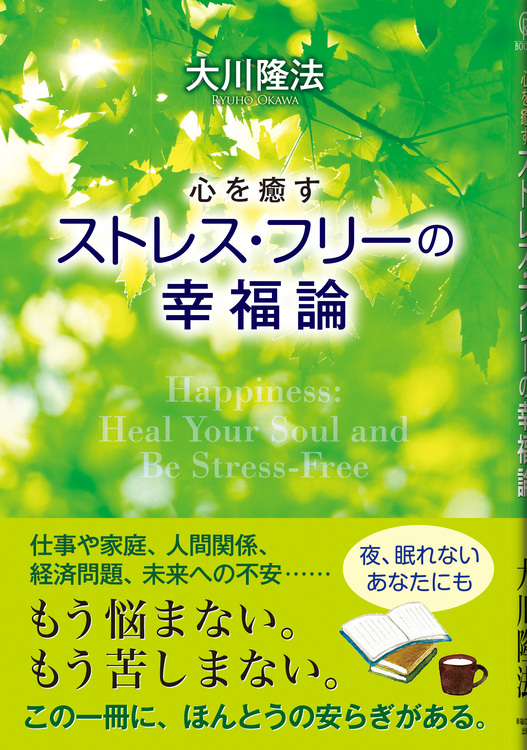
(From 'Healing the Heart: A Stress-Free Theory of Happiness' )
Let's grasp the "seeds of success" from failure.

What we learn from failure is the most important thing in the study of success. If all we can draw from failure are feelings of self-deprecation, inferiority, and curses against the world, it will indeed be difficult to join the ranks of successful people.
What will you learn from failure?
"Failing" means "challenging". If you don't challenge yourself, you can't fail. If you failed as a result of challenging yourself, then what is important is "what you learn from that". The fact of failure provides material for thinking about "what was lacking in myself? Why didn't I succeed?".
For example, it may be that you lacked ability or talent. The environment may have been unfavorable. There may have been some circumstances.
However, that reality is definitely teaching you something. It is important to learn as much as you can from it. If you do so, when a similar situation arises next time, you will be able to overcome it easily.
Then, inevitably, new trials will appear, and you must overcome them.
The most important thing in the study of success is, as mentioned earlier, "to find the seeds of success from failure and grasp them". This is something that must be kept in mind at all costs. Simply avoiding failure will not lead to success. That means "not challenging".
As long as you challenge yourself, failures will arise, but you must have the mindset of "grasping something from failure and growing even bigger".
(From 'The Law of the Future' )
A talk by Ryuho Okawa, the founder.
What to do when you lose despite using all your wisdom.
──The courage to forgive yourself.
A prescription for your heart - blaming yourself.
The talk introduced in the above video is included in the following books.

'The Power to Forgive Sins'
・The courage to forgive yourself.
・It is okay for the suffering of the heart to have a statute of limitations.
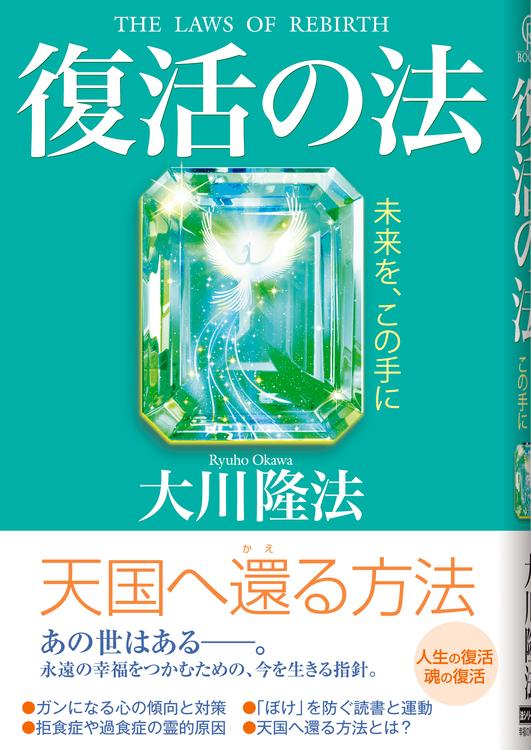
'About Aging, Illness, and Health'
Bullying oneself makes not only oneself but also others unhappy.
'Living while being tossed by the great waves of fate'
Let's check if there is a tendency to love unhappiness.

'Introduction to the Study of Success'
Let's grasp the "seeds of success" from failure.
Listening prescription (from the radio program 'Angel's Morning Call')

From the past broadcasts of the popular radio program of Happy Science, 'Angel's Morning Call' (national network + Hawaii KZOO), we introduce programs that we want you to listen to now. (You can listen to it in audio.)
(1) 'Goodbye! Unhappy Me' [Episode 999]
(2) 'Tips for Living Heavily and Authentically!' [Episode 1303]
(3) 'Do you have room in your heart?' [Episode 981]
一人で悩まないで、「自殺防止相談窓口」にお電話ください

仏法真理に基づいた「魂の救済」を目指して、2020年5月8日(金)より幸福の科学「自殺防止相談窓口」を開設しています。電話やメールにて相談することができます。
幸福の科学「自殺防止相談窓口」
◇電話番号 03-5573-7707
◇メールアドレス withyou-hs@happy-science.org
◇時間 火曜~土曜[祝日を含む]10:00~18:00
※相談料は無料です。別途、通話料・通信料がかかります。
メールでご相談いただいた方へ
自殺防止相談窓口からお返事がない場合、携帯の設定によって届かない場合がございます。
以下の場合、【withyou-hs@happy-science.org】を受信できるよう設定をお願いいたします。
・迷惑メールと判断し、受信拒否・削除されている
・パソコンメールからの受信を拒否している
お手数をおかけしますが、設定後、再度メールをお送りいただけると幸いです。
This article is a reprint from 'Suicide Prevention Site - Words of Truth for You' with edits added.


PICK UP



 ログインが必要 … 閲覧には
 入会者限定 … 幸福の科学の会員のみ閲覧が可能です。
 三帰誓願者限定 … 幸福の科学の三帰誓願者のみ閲覧が可能です。
  植福の会参加者向け …
  大黒天信者向け