
Recovering from business downturns
(Last Update: )
I understand that the weight of responsibility and mental strain can make every day so painful that you can't even sleep at night. However, please do not give in to despair; first and foremost, think about protecting yourself and your family. As long as you are alive, you can recover...

I understand that the weight of responsibility and mental strain can make every day so painful that you can't even sleep at night.
However, please do not give in to despair; first and foremost, think about protecting yourself and your family.
Please believe that as long as you are alive, you can recover.
From the teachings of Ryuho Okawa, I have selected a prescription for the heart that you need right now.
Table of Contents
- Only by living can you recover.
- As long as you can inspire emotion, any business will surely advance.
- Once you exceed a certain scale, a 'financial person' is necessary.
- The reason why the president's final judgment is necessary for 'finance' and 'human resources.'
- The management philosophy can also become the reason for employees' existence.
- How to create surprises that give overwhelming differences from competitors in the same industry.
- Regarding cash flow, one must study before being cornered.
- Efforts for reversal within the limited time of life.
- Prescription for Listening (from the radio program "Angel's Morning Call")
Only by living can you recover.

At this point, we must deal with the aftermath of defeat. We need to think about how to close the company effectively. Those who can close it well can avoid suicide. However, those who fail to do so may end up committing suicide or causing family tragedies.
Therefore, we must understand that it is not just about thinking of winning; we must also recognize that there is such a thing as a retreat. It is important to minimize the damage. If we can retreat and stop the damage, we can rebuild our strength once again. However, if we do not do this, we may face total annihilation.
Even Oda Nobunaga, when he thought he was defeated, fled for his life, fighting alone. When his ally, the Azai clan, turned against him and his army was caught between the Asakura and Azai forces, Nobunaga realized, "If I am caught in an unexpected pincer attack, no matter how many lives I have, it won't be enough," and fled back to Kyoto alone.
It's not about pride. If he had tried to protect his pride by thinking, "I am the ruler of the world" or "I am the strongest in Japan," he would have had to fight even if the enemy doubled or betrayed him. However, once Nobunaga realized there was no chance of victory, he immediately fled back.
There are no generals who are bad at retreating and have survived to win. The method to survive long-term is to "win when you should win, and skillfully withdraw when you should lose."
The same applies to company management. There are times when you can win, but there are also times when you must face defeat. It is crucial to skillfully withdraw during a losing battle and then rebuild.
Some people, feeling guilty towards long-serving employees, try to ensure the company's survival by accumulating debt upon debt. However, at such times, there should also be a mindset that considers, "Even if not all employees can survive, is there a way for 80% of them to survive?"
What should be done for 80% to survive? There may be departments that should be closed, products that should be cut, and debts that need to be repaid.
In this way, the idea of "can we survive even if it's only 80%?" is also important. Focusing on ensuring that everyone survives can sometimes lead to failure.
If we do not exhaust our wisdom and develop strategies for retreat, we may simply enter a losing battle, leading to suicide as a result. We must use worldly wisdom where it is needed.
The logic of "it’s okay to end in ruin" should be avoided. Life is about living, and only by living can we recover. Even if there have been many past failures, it is possible to start over.
Ultimately, before resorting to suicide or family tragedies, there are things that should be done. If you think about it, there are certainly things that should be done. Before reaching that state, there should be many instances of thinking, "I should have stopped that" or "I shouldn't have done this."
In that way, we must do everything we can and retreat.
As long as you can inspire emotion, any business will surely advance.

If I were to state just one conclusion about the secret to prosperous business, it would be, "To inspire emotion in people."
If you want your business to prosper and profits to increase, it is essential to inspire emotion in people. This is a secret to business prosperity that applies to everyone, from the president to the lowest-level employees, regardless of industry or type.
This is the conclusion. It is to inspire emotion in others through your words, attitude, and the products or services you sell.
Those who can continue to succeed in this will see their work improve, regardless of the industry.
Under a president who can inspire emotion in many people, employees will also unite and be able to inspire emotion in customers, leading to the company's certain development.
The same can be said for religion. To advance evangelism, it is indeed crucial to inspire emotion in others.
As long as you can inspire emotion, any business will surely advance.
Once you exceed a certain scale, a 'financial person' is necessary.
While looking at the evening edition of the newspaper, I saw a company that operates a vegetable factory on the front page. It is a company that has survived the competition of one in ten and is now featured on television and often appears in the newspaper. It stated, "Having won the competition, we will open factories in various locations." While that may be exciting, from a financial perspective, I feel a bit 'scared.' Without a proper financial person, there is a risk of going bankrupt. Even if they develop, if there is no one who can properly see whether investments will yield results from cost control, it is dangerous.
Even if there is a demand to start, there are countless instances where rivals eat into that demand or it disappears midway. This is where management becomes very 'critical.' Once you exceed a certain scale, it becomes risky. If it exceeds the president's capabilities, it becomes dangerous, and without a 'helper,' management becomes impossible.
At the previous stage, banks sometimes act as substitutes. When wanting to expand a factory or production line, one goes to the bank for a loan. They prepare documents and the president explains them personally.
If there is no 'financial aspect' developed internally and internal opinions cannot be heard, if the bank does not lend after hearing that explanation, it indicates that they feel 'danger.' In this regard, if you think you are 'developing' but outsiders see it as 'dangerous,' you need to consider 'why.' It may require the skills to persuade further. I believe that is something that can be said.
The reason why the president's final judgment is necessary for 'finance' and 'human resources.'

Now, while the finance department deals with 'how to procure and use money,' the human resources department considers 'how to procure and use people.' These correspond to the 'staff departments' in a company.
Therefore, while there should be decision-making authority close to the field, ultimately, it is a section that organizes information, becomes the right-hand person of the top, and directly advises the top with the thought, 'I think this is the best way.' In that sense, it is a staff department.
In other words, while having a precise and accurate way of thinking as a staff member, it is important to present that thought to the top through planning and ultimately seek their judgment.
Moreover, the top side must understand that 'if you escape this final judgment, you are not the top.' This is where responsibility arises.
This is because employees often cannot understand 'management philosophy' or 'management policy.' Even if the president's management policy is announced at the beginning of the year, they may feel, 'They are saying something, but I don't really understand. They talk about how the global environment has changed, how the management environment has changed, and what to do about deflation. They say something about our company too, but it feels like listening to an old sutra and makes me sleepy; I don't understand at all.'
However, employees can understand 'human resources.' Of course, it may be a bit harsh for new employees, but even young employees and female employees can see the announced personnel changes and understand the company's direction. This is something that can be judged quite well in 'neighborhood meetings,' where it becomes clear who has been promoted, who has been demoted, who has been let go, or what kind of work the upper management values.
In other words, for employees, the results of human resources are easy to understand as part of the management policy, and it is clear at a glance what kind of thoughts the top has at any given time by looking at human resources. In this sense, it is necessary to know that 'human resources remain the responsibility of the top.'
Additionally, the way human resources are judged can reveal to some extent 'what kind of future the company envisions.' The top has a responsibility regarding this.
This is likely the same for 'finance.'
Even if there are opinions from financial experts, for example, 'Should we take out loans to build a factory? Or should we reduce our loans instead of building a factory?' Such significant judgments should not be made solely by the finance manager's decision.
The finance manager may suggest, 'Let's build a factory even if we have to borrow money,' or 'No, let's pay off our debts,' providing various opinions with justifications. They might also say, 'Since we are expanding sales, let's hire a hundred new employees,' or 'Let's bring in this many mid-career hires,' or 'Let's offer this much in retirement benefits,' and so on.
However, ultimately, the decision of 'whether to do it or not, whether to proceed or retreat, or whether to make partial adjustments' remains with the top.
'Human resources' and 'finance' are very important as staff departments, and while they must have capable corporate executives, I want to emphasize that 'the judgment of the commander remains. If you abandon this, it will be the end, and you will enter a Dutch roll.'
Written by Takahiro Okawa: 'Management is indeed a tough thing.'
The management philosophy can also become the reason for employees' existence.

When the management environment itself becomes a situation where bankruptcies increase due to recession, it is human nature to become timid. There are times when 'everyone becomes timid and cannot take on new challenges.'
When starting a company, there must have been courage, but as the company grows to a certain extent, self-preservation kicks in, and in seeking stability, it gradually leads to maintaining the status quo, and courage diminishes.
I understand the feeling of becoming that way. As work expands beyond what one can see, and various people are working, there arises a feeling that 'whether I say something or not, it doesn't change much.' Additionally, more people start to think, 'I don't want to take responsibility.'
However, when courage diminishes, as a president, one must rethink and refine their thoughts at this point.
At first, one might have started the company with the aspiration of 'doing what I like, being able to feed myself and my family, and ensuring employees can eat their fill,' but once it has grown to a certain scale, that alone is not enough.
It is essential to articulate the justification of 'why our company must develop and prosper.'
As mentioned earlier, others do not teach entrepreneurs. The fact that 'others do not teach' means 'one must think for themselves.' Even conducting surveys among employees is not sufficient. Ultimately, the president must suffer and think for themselves.
One must deeply consider 'why our company must grow from ten employees to fifty' and 'we have set a sales target of surpassing one billion yen in annual sales, but why must our company surpass one billion yen in annual sales?'
This is what is called 'management philosophy,' but small and medium-sized enterprises often struggle to establish a management philosophy. In most cases, the president of a small or medium-sized enterprise thinks, 'I am managing alone,' and the management philosophy is like their 'reflection notebook,' which they feel embarrassed to share with others, making it difficult to articulate.
However, without creating a management philosophy, a company cannot grow significantly.
As long as one is satisfied with their own understanding, the company will not grow, so one must think deeply and create a management philosophy.
'What is our company for?' 'What does our company's development lead to? What is the purpose?' One must refine and create such ideals and management philosophies.
However, in the case of small and medium-sized enterprise presidents, most say, 'We don't need such things.' Many say, 'As long as we can procure goods and generate sales, that's enough,' or 'As long as profits exceed debts, that's all that matters.' However, even if small, when twenty, thirty, or fifty employees gather, they must have a reason for living while working.
How to create surprises that give overwhelming differences from competitors in the same industry.
Business management must be based on one's aptitudes, and for that, one must discern 'where their talents lie.'
Even if one thinks, 'I have no talent now,' there are cases where talent can be developed by changing one's mindset through effort, so it is advisable to consider this when choosing a business.
Once a business is chosen, the next step is to search for what can be called 'the seeds of business,' 'the seeds of work,' or 'the seeds of livelihood,' and it is important to gather information repeatedly, and within that information gathering, one must make efforts to increase repeat customers.
If customers are getting bored, one must make efforts to improve or add something.
Such efforts are necessary, and ultimately, to create an overwhelming difference from competitors in the same industry, it is important to think about 'surprises.'
What is one of those surprises?
The basic formula is indeed 'the combination of different elements.' If there is a combination of different elements that feels somewhat unusual, making one think, 'I can't believe this is happening here,' it becomes a surprise.
Alternatively, 'a little thoughtfulness' is also acceptable, or 'something unexpected for the other party' is also good.
For example, when a repeat customer comes, remembering their name or even their family structure can be impressive. Asking, 'How is your child?' or 'How is your son?' or 'How is your daughter?' can feel a bit 'scary.'
Furthermore, if one remembers, 'At that time, we were talking about this,' it becomes significant. If a customer previously mentioned, 'I'm struggling with this,' when they come back, asking, 'What happened after that?' and showing that you care can indeed surprise them.
However, even with loyal customers who have been coming for a long time, if the staff member takes a day off and someone else takes over, treating them like a complete newcomer can be frustrating, and they may stop coming, so it is very important to ensure proper handover and communication.
In short, having the intention to please the other party through 'surprises in thoughtfulness' or 'surprises in the way products or services are presented' can lead to long-lasting relationships.
Therefore, while customers may not readily share their thoughts, when they seem to be getting bored, one must carefully consider 'why they are getting bored.' Please take care of that.
Regarding cash flow, one must study before being cornered.

Some people think, 'It's fine because I have a subordinate who handles accounting,' but management cannot be done through accounting. Accounting and management are different. Management must look at the whole, so unless the president studies about money themselves, they will not be able to manage well.
As a result, in cases of suicide among entrepreneurs, there are many instances where 'technically skilled individuals fail in cash flow management and commit suicide.'
Also, in the case of presidents from sales backgrounds, it often happens that they 'commit suicide because they do not understand cash flow.'
One must study cash flow before being cornered.
When you go to a bookstore, there are many books on cash flow. You might think, 'I didn't learn this in college, so I won't understand it even if I read it,' but it doesn't have to be a difficult academic book. There are many simple how-to books that can be read in two or three hours, so buying five or ten of those and taking about a month to read them will help you understand somewhat.
Efforts for reversal within the limited time of life.
Life in this world lasts only up to 120 years, and most people can only live for a few decades. Even if one thinks, 'I will come back again,' they cannot be reborn immediately.
In this life, having made the effort to be born into this world, there is no need to rush to die. Eventually, one must die, and the time of death will inevitably come.
Given that, within the remaining time, it is worth making an effort to see if a reversal is possible. The same opportunity will not come again, so one should try as hard as possible.
For that, one should not have overly perfectionistic tendencies. It is important to accept the imperfect aspects of being human, the animalistic parts in a sense.
Both oneself and others have animalistic traits, and that is why we can be swayed by emotions, getting angry, lamenting, shouting, failing, feeling like victims, and attacking.
Humans have such imperfect parts, and because there are imperfect parts, there is still training left to be done. One must understand that 'you must accept imperfection.'
Moreover, if one pursues sin too much, they may create even larger new sins. Being overly fastidious can lead to committing significant sins again.
Failures in company management are common. However, at that time, due to pride, one may find it difficult to back down, stubbornly pushing forward, leading to further ruin. As a result, not only oneself but also one's family may become victims. However, this could have been avoided.
Therefore, instead of fighting solely for honor and pride, one should calmly consider how to respond. For matters that can be addressed with worldly wisdom, one should think thoroughly.
Furthermore, when wisdom runs out, courage is also necessary. It takes courage to forgive oneself and to forgive others. One must possess that courage.
The teachings introduced above are included in the following books.


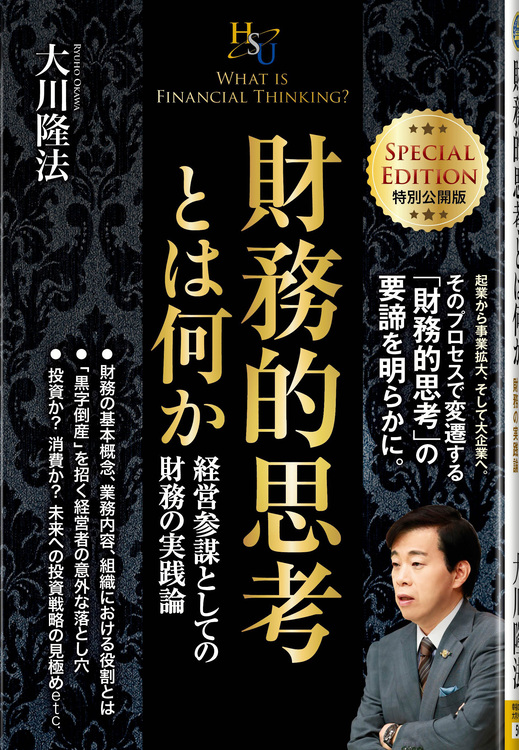

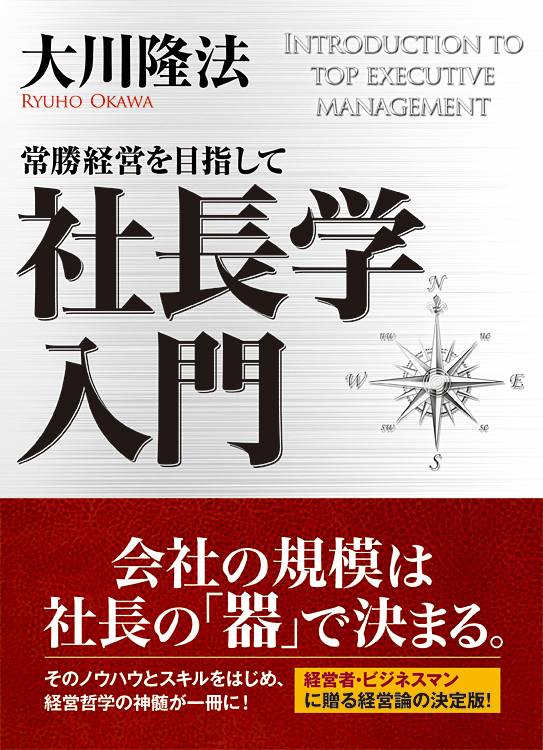


Prescription for Listening (from the radio program "Angel's Morning Call")

From the popular radio program of Happy Science "Angel's Morning Call" (national network + Hawaii KZOO), we introduce programs that we want you to listen to now from past broadcasts. (You can listen to it in audio)
(1) "For Those Who Want to Give Up Everything" [Episode 1121]
(2) "For Those Who Spend Sleepless Nights" [Episode 1130]
一人で悩まないで、「自殺防止相談窓口」にお電話ください

仏法真理に基づいた「魂の救済」を目指して、2020年5月8日(金)より幸福の科学「自殺防止相談窓口」を開設しています。電話やメールにて相談することができます。
幸福の科学「自殺防止相談窓口」
◇電話番号 03-5573-7707
◇メールアドレス withyou-hs@happy-science.org
◇時間 火曜~土曜[祝日を含む]10:00~18:00
※相談料は無料です。別途、通話料・通信料がかかります。
メールでご相談いただいた方へ
自殺防止相談窓口からお返事がない場合、携帯の設定によって届かない場合がございます。
以下の場合、【withyou-hs@happy-science.org】を受信できるよう設定をお願いいたします。
・迷惑メールと判断し、受信拒否・削除されている
・パソコンメールからの受信を拒否している
お手数をおかけしますが、設定後、再度メールをお送りいただけると幸いです。
This article is a reprint from "Suicide Prevention Site - Words of Truth for You" with edits added.


PICK UP

 ログインが必要 … 閲覧には
 入会者限定 … 幸福の科学の会員のみ閲覧が可能です。
 三帰誓願者限定 … 幸福の科学の三帰誓願者のみ閲覧が可能です。
  植福の会参加者向け …
  大黒天信者向け